Reviewing Mother T-shirt Design 128 for Real Embroidery
As a designer who spends more time staring at stitch simulations than I do sleeping, I approach every new digital embroidery file with a mix of optimism and skepticism. We have all been there: you download a beautiful graphic, only to realize it turns into a bird's nest of thread once it hits the fabric. Today, I am taking a close look at Mother T-shirt Design 128, specifically evaluating its potential for real-world application in a craft business or personalized gift setting.
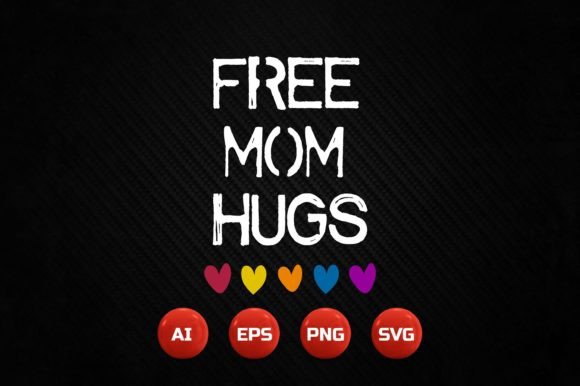
The product listing describes this as a "FREE MOM HUGS" design, available in AI, EPS, PNG, and SVG formats. It claims to be 100% print-ready with resizable vector shapes. While these are excellent features for a printer or a vinyl cutter, my job is to determine how this translates when we move from screen to needle. Does this T-Shirt Designs asset hold up under the tension of an embroidery hoop? Let's dig in.
First Impressions: Mood and Visual Personality
When I first pulled up the preview for Mother T-shirt Design 128, the immediate feeling was one of warmth and nostalgia. The theme revolves around the concept of "Mom Hugs," which naturally lends itself to soft, rounded typography and perhaps some heart motifs or embracing figures. For an embroidery project, this mood is crucial. It dictates the thread choices and the fabric texture we need to select to do the design justice.
The layout appears clean, which is a good sign. In the world of Graphics intended for apparel, clutter is the enemy of clarity. A design that looks busy on a high-resolution monitor can become a muddy mess when stitched out with thread. The visual personality here feels approachable and friendly, making it an ideal candidate for items meant to evoke comfort. However, because the source files are vectors (AI, EPS, SVG), the responsibility falls on the embroiderer to ensure the conversion to a machine embroidery design respects the original intent without losing detail.
Real-World Application: The Sweatshirt Scenario
To truly test the viability of this design, I imagined a specific client request. A local boutique owner wanted a limited run of oversized, fleece-lined sweatshirts for a Mother's Day collection. She needed something that felt handmade but professional. This is where Mother T-shirt Design 128 shines.
Fleece is a forgiving fabric with a nice loft, which works wonderfully with fill stitches. If this design incorporates solid areas, the texture of the fleece helps prevent puckering, provided the stitch density is managed correctly. I envisioned placing the design centrally on the chest, perhaps slightly lower for that modern, relaxed fit. The "Mom Hugs" message pairs perfectly with the physical sensation of wearing a warm sweatshirt.
Beyond sweatshirts, this design would translate beautifully to a heavy canvas tote bag design. Imagine a natural-colored bag with the text stitched in a contrasting earth tone. It becomes more than just a bag; it becomes a statement piece for a market day or a grocery run. For an Etsy seller, offering this on a variety of substrates like aprons or kitchen towels could create a cohesive "Mother's Care" product line.
Navigating Fabric Challenges and Hoop Limitations
While the design has strong potential, we must discuss where caution is required. The product description notes that the shapes are resizable. This is a double-edged sword in embroidery. If you scale Mother T-shirt Design 128 down too small for a baby onesie or a pocket on a cap, you risk losing the integrity of the lettering. Tiny details that look crisp in an SVG file can vanish or merge when stitched with a standard running stitch or narrow satin column.
If you are working with stretchy fabrics like jersey knits for custom apparel, stabilization is non-negotiable. The "hug" theme implies comfort, and nothing ruins comfort like a stiff, puckered patch of stitching. I would recommend using a cut-away stabilizer for longevity, especially if the finished product will undergo frequent washing. For textured fabrics like waffle weave or terry cloth, you might need to adjust the underlay settings or use a water-soluble topper to ensure the stitches sit on top of the loops rather than sinking in.
Furthermore, consider the hoop size. If you are adapting this for a curved surface like a baseball cap, ensure the design fits within a standard cap frame without requiring excessive manual re-hooping, which can lead to alignment issues. The simplicity of the design likely helps here, but always measure twice.
Commercial Viability and Brand Consistency
For those running a craft business, consistency is key to building trust. Using a design like Mother T-shirt Design 128 across different products—say, a matching set of a pillow cover and a tea towel—creates a recognizable brand aesthetic. The clean lines suggest a modern farmhouse or minimalist boutique style, which is currently very popular in home decor and wearable art.
However, before listing this as a small shop product, you must verify the licensing terms. The description mentions it is a free design, but "free" does not always mean "free for commercial use." Always check the specific license attached to the download. If commercial use is permitted, this asset offers high value because it requires minimal editing to look professional. If you are selling digital products, remember that this is provided as vector art (AI, EPS, SVG), not necessarily as a pre-digitized embroidery file. You may need to digitize it yourself or hire a digitizer to convert those vectors into a stitch file compatible with your machine.
Practical Notes for the Working Designer
Before you commit to a full production run, here are my practical recommendations for working with this specific asset:
- Test on Scrap First: Never skip the stitch-out test. Use the same fabric and stabilizer combination you plan to use for the final product.
- Check Color Contrast: The design relies on readability. Ensure your thread colors pop against the fabric background. A dark thread on a dark shirt might look sophisticated in theory but fail in practice.
- Review Stitch Density: If you are digitizing this from the provided vectors, pay attention to the fill areas. Too dense, and the fabric will pucker; too sparse, and the backing will show through.
- Mockup Verification: Create black and white mockups to see how the design holds up without the distraction of color. This helps identify potential clarity issues.
- Confirm File Compatibility: Since the package includes AI, EPS, PNG, and SVG, ensure your software can import these correctly if you plan to edit the shapes before digitizing.
Final Thoughts on Value and Execution
In the crowded marketplace of T-Shirt Designs and decorative graphics, Mother T-shirt Design 128 stands out for its emotional resonance and versatile layout. It is not just a picture; it is a sentiment that sells well during holidays, birthdays, and everyday moments of appreciation.
For the experienced maker, this design represents a solid foundation. It offers the flexibility to be dressed up with metallic threads for a holiday gift or kept simple with cotton floss for a rustic look. The key to success lies in respecting the material limitations and understanding that while the vector file is infinite in scalability, the embroidery process has physical boundaries.
Whether you are creating a personalized gift for a family member or stocking shelves for an online store, this design has the potential to become a bestseller if executed with care. It reminds us that the best embroidery projects are those that combine technical precision with genuine human connection. Just remember to handle the transition from vector to stitch with the attention it deserves, and you will end up with a finished product that truly feels like a hug.